
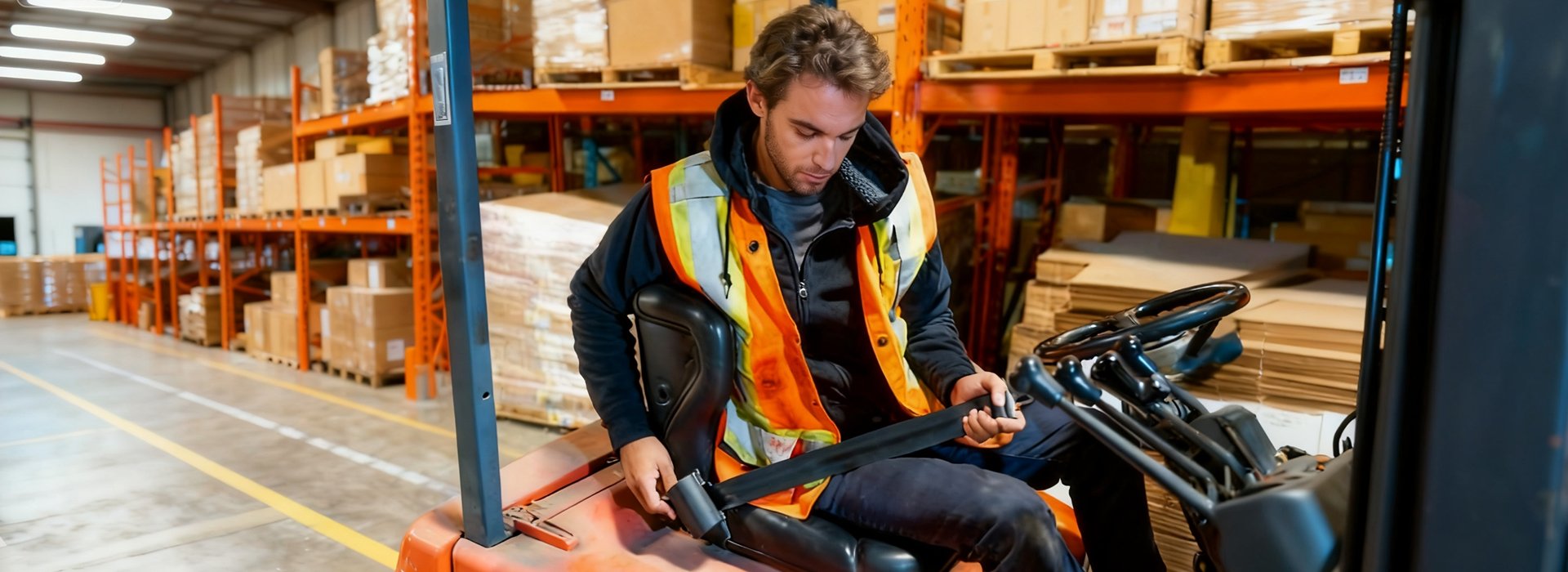
DEMS has supplied forklift seat belts for more than 10 years. There are about 100 factory employees, including a 15-person R&D team. So we can accept your personalized custom forklift seat belt with our expert team. If you need, we can provide free samples to match your forklift.
Our factory has a total of 8 production lines for seat belt related products, and each production line is equipped with semi-automatic production equipment. We can achieve a daily output of 15,000 buckles or 15,000 seat belts. Whether you need OEM or ODM seat belts, just send us your drawing, image, or even an idea, and DEMS can always make it for you.
Types of Your Forklift Seat Belt
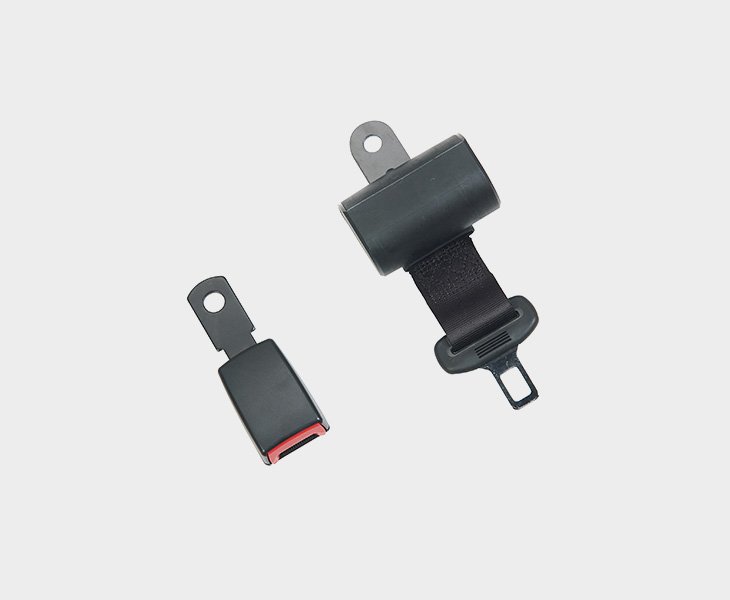
DEMS offers primarily two types of forklift seat belts. The most common one is the three-point seat belt, which consists of a shoulder strap, a lap belt, and a buckle, similar to car seat belts. The other type is 2-point seat belts, which only include a lap belt with two anchor points on either side of the seat without a shoulder strap. You can select the seat belt based on your forklift’s design.
Safety Standards of Your Forklift Seat Belt
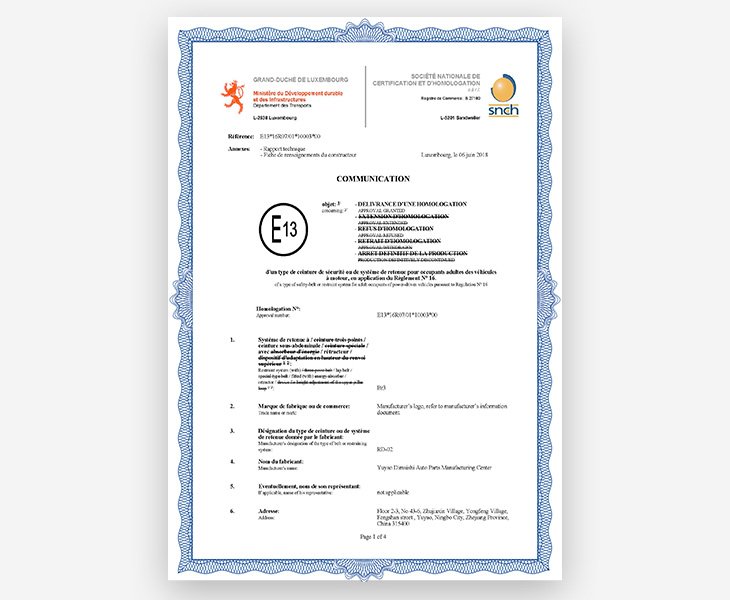
DEMS forklift seat belts have passed tensile tests. Its anchor point strength is more than 15,000 N to ensure no detachment during collisions. Our seat belt is made of high-strength polyester webbing, resistant to wear and aging. Our products are manufactured, tested, and certified to international standards as required, i.e., CCC, ECE R16, ISO 9001:2015 and TS16949. You can get your forklift seat belt with high standards and quality.
Usage Guidelines of Your Forklift Seat Belt
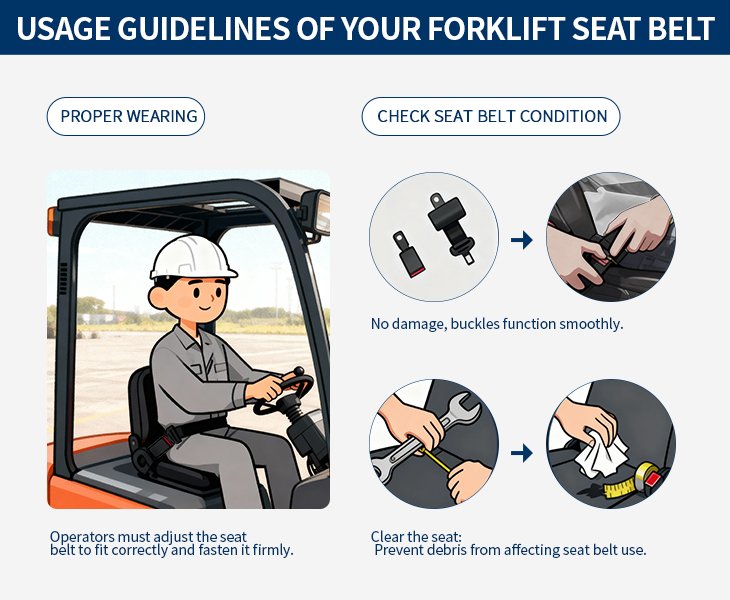
Seat belts are your best protection. When driving forklifts, it is obviously important to wear a seat belt to improve the driver’s safety. Here are some usage guidelines for your forklift seat belt.
Proper Wearing: Operators must adjust the seat belt to fit correctly and fasten it firmly.
Routine Inspections: Check the seat belt regularly for damage. Make sure the functional latches and secure anchor points of the seat belt are in good condition.
Yes, forklift drivers should always wear a seat belt while operating their forklifts. If not, it increases the risk of injury to the operator, their coworkers, and anybody nearby.
Forklifts have a high center of gravity, which makes them unstable if the operator turns too fast, drives on uneven surfaces, or carries an imbalanced load. A seat belt keeps the operator secure and prevents the operator from being ejected and crushed, reducing the chance of injury or death.
The purpose of the seat belt is to protect in emergencies and give stability support. When a forklift carries loads, seat belts secure the operator during sudden stops, sharp turns, or collisions, preventing them from being thrown out of the seat or striking controls due to inertia.